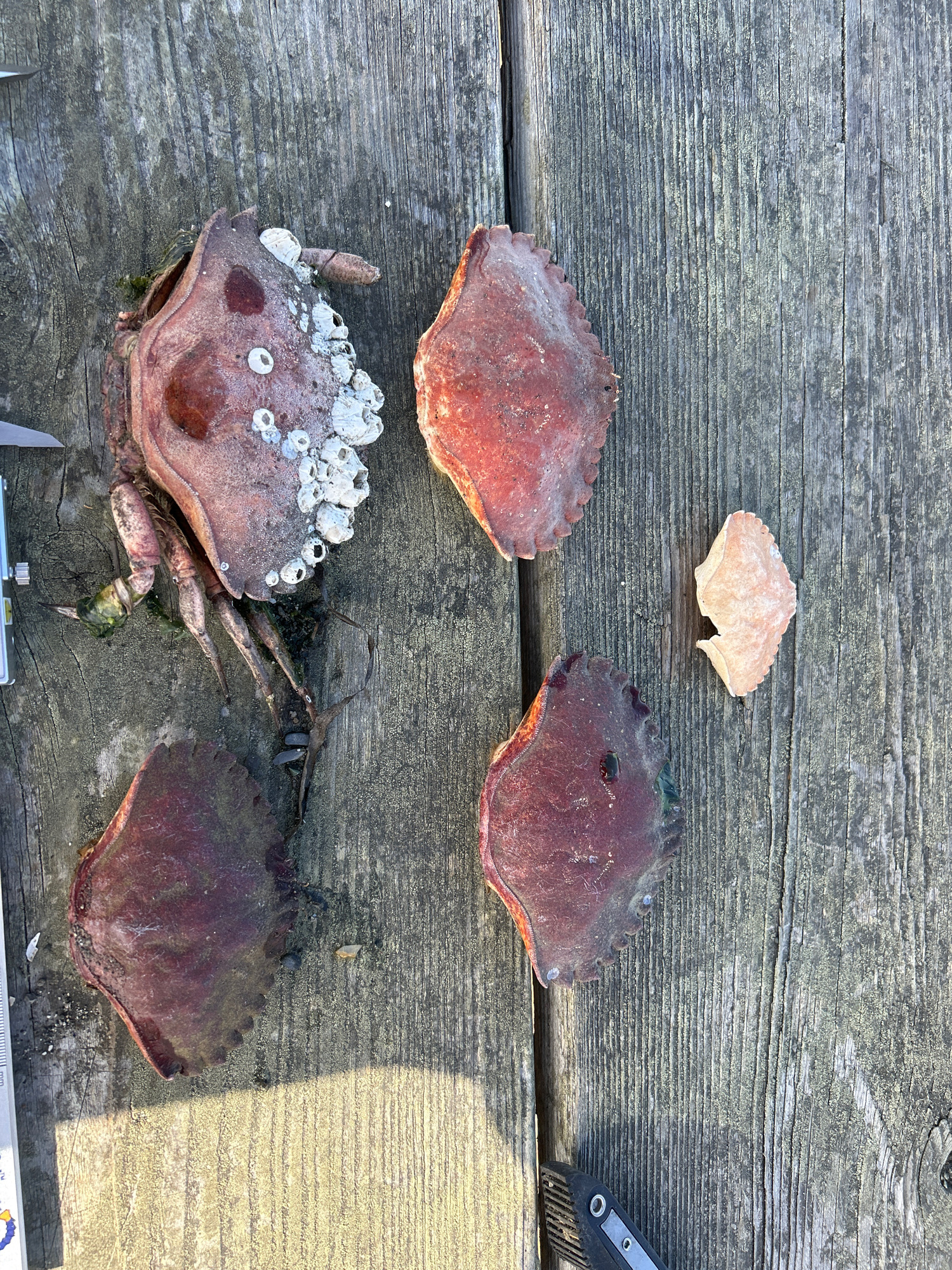
Hi Gunnar, Thanks for taking the time to do a Molt Search! Your data will go even further if you’re able to capture an object of known size for scale in the photo (looks like you may have had calipers with you, just out of frame this time. The users of this dataset really appreciate folks like you who take the time to get measurements. We include them in the dataset in millimeters. These crabs you found are actually red rock crab, distinguished from Dungeness crabs by the protruding rostrum (between its eyes) and more pie-crust-like marginal teeth. Dungeness crabs are widest at their 10th, final tooth, unlike these red rock crabs, which you’ll notice get widest at their 9th. It’s an easy switch on the backend here that I’ll do on that thanks to your great overhead photo. Glad to have you part of this important work with us and really appreciate these data!



1 Comment. Leave new
Hi Gunnar, Thanks for taking the time to do a Molt Search! Your data will go even further if you’re able to capture an object of known size for scale in the photo (looks like you may have had calipers with you, just out of frame this time. The users of this dataset really appreciate folks like you who take the time to get measurements. We include them in the dataset in millimeters. These crabs you found are actually red rock crab, distinguished from Dungeness crabs by the protruding rostrum (between its eyes) and more pie-crust-like marginal teeth. Dungeness crabs are widest at their 10th, final tooth, unlike these red rock crabs, which you’ll notice get widest at their 9th. It’s an easy switch on the backend here that I’ll do on that thanks to your great overhead photo. Glad to have you part of this important work with us and really appreciate these data!